
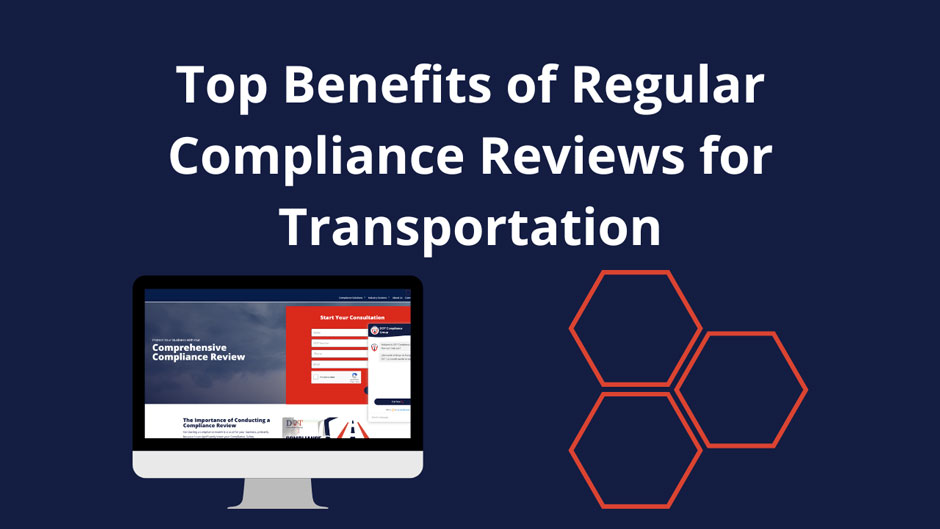
Ensuring your transportation business stays compliant and efficient is crucial in today’s rapidly evolving regulatory environment. The Department of Transportation (USDOT) is constantly updating and adding new regulations, making it challenging for businesses to keep up.
Regular compliance reviews can help your business stay on top of these changes and ensure that you are operating within the legal guidelines. Not only do they reduce legal risks, but they also enhance safety and improve overall operations.

Why Regular Compliance Reviews Matter
Navigating the complex landscape of transportation regulations requires ongoing diligence. Rules at the local, national, and international levels are continually evolving, and trucking businesses face increasing scrutiny.
Non-compliance can result in fines, lawsuits, and reputational harm, underscoring the importance of regular compliance reviews. For a deeper look into compliance benefits, check out how compliance reviews can lower your insurance rates.
Reduces Legal Risks and Penalties
Transportation companies operate in a tightly regulated environment. Compliance reviews are invaluable in identifying potential legal risks and averting costly penalties, which, for small to medium-sized businesses, can severely impact profitability.
Fines and sanctions for regulatory breaches can increase operational costs, making it harder to remain competitive. Warning letters and DOT violations can also impact a company’s CSA score, affecting its ability to secure contracts and insurance coverage.
Enhances Safety Standards
Safety compliance is critical to preventing accidents, injuries, and fatalities. By adhering to safety regulations — such as driver hours, vehicle maintenance protocols, drug and alcohol testing, and hazardous materials compliance — companies can protect their workforce and the general public.
Roadside inspections and regular compliance reviews help identify potential safety hazards and ensure that companies are taking the necessary precautions to mitigate risks. By addressing any issues promptly, transportation businesses can maintain high safety standards and protect their drivers, equipment, and reputation.
Improves Operational Efficiency
Following compliance standards requires companies to implement and maintain robust processes and workflows. This can have a positive impact on overall operations by streamlining processes, reducing redundancies, and improving efficiency.
For example, regular compliance reviews can help identify any gaps in driver training, leading to targeted training programs that not only improve compliance but also enhance driver skills and safety awareness. In turn, this can lead to better route planning, reduced downtime for vehicle maintenance, and overall improved fleet management.
Builds Trust and Reputation
By consistently adhering to safety standards and regulations, transportation companies demonstrate their dedication to protecting the well-being of their drivers and the general public. This can lead to increased trust in the company’s operations and a positive reputation among industry peers.
Moreover, maintaining a strong record of compliance can give businesses a competitive advantage. Clients are more likely to choose a carrier with a good safety track record, while insurance providers may offer lower rates for compliant companies.
To ensure your business remains compliant and maintains a favorable CSA score, consider partnering with DOT Compliance Group. Our team of experts offers comprehensive compliance solutions tailored to your unique needs.
Keeps Businesses Updated on Regulatory Changes
The FMCSA and other regulatory bodies frequently make changes to trucking regulations and safety standards. These updates can significantly impact a company’s operations and compliance requirements.
Regular compliance reviews help businesses stay informed of any changes and ensure they are implementing the necessary measures to remain compliant. This not only helps companies avoid penalties but also keeps them ahead of industry trends and best practices.
Furthermore, compliance reviews can provide important insights into upcoming regulatory changes, allowing businesses to proactively prepare for any new requirements or procedures. This helps companies stay on top of their legal obligations and maintain a positive reputation within the industry.

Understanding the Compliance, Safety, and Accountability (CSA) Score in a Compliance Review
A central metric in the transportation industry, the Compliance, Safety, and Accountability (CSA) Score reflects a company’s adherence to safety standards. Developed by the Federal Motor Carrier Safety Administration (FMCSA), this score assesses violations and safety practices across various categories.
Driver CSA Score: The Basics
Under the CSA program, carriers receive a score or CSA points based on their performance in the following safety improvement categories:
- Unsafe driving
- Crash indicator
- Hours-of-service (HOS) compliance
- Vehicle maintenance
- Controlled substances and alcohol
- Hazardous materials
- Driver fitness
A driver’s CSA score is calculated based on the number of violations and severity weights for each violation. The higher the score, the more likely a carrier will receive intervention from FMCSA.
What Is Considered a Good CSA Score?
The CSA Score system ranks companies based on truck driver scores and vehicle safety performance. A low CSA Score is favorable, as it indicates fewer violations.
The recommended target for a CSA score is below 60 points. Scores above this range could indicate serious safety concerns and result in interventions from FMCSA.
To improve CSA scores, adopting driving and safety habits that enhance compliance and mitigate risk is crucial.
How to Check Your CSA Score
Companies and drivers can perform a CSA Score lookup through FMCSA’s official online portals. This allows them to review their standing, identify potential areas for improvement, and ensure proactive safety management.
How a Compliance Review Impacts CSA Scores
Compliance reviews play a crucial role in assessing a company’s safety practices and compliance with regulations. These audits include an in-depth evaluation of various elements like Commercial Driver’s License (CDL) driver qualifications, vehicle maintenance, hours-of-service (HOS) logs, drug and alcohol testing procedures, and more.
Since CSA scores are directly influenced by how well motor carriers and CDL drivers comply with regulations, regular compliance reviews help companies maintain low scores or improve high scores. A lower CSA score translates to enhanced safety practices and reduced risks for your business.
How to Implement Regular Compliance Reviews
Implementing compliance reviews doesn’t have to be complex. Here are some practical steps transportation companies can follow to conduct effective reviews.
Step 1: Building a Compliance Checklist for Fleet Managers
A compliance checklist serves as a guide for fleet managers to systematically track adherence to regulations. Covering areas such as vehicle inspections, driver qualifications, and training, this checklist ensures that all compliance aspects are consistently met.
Step 2: Training Staff on Regulations
Regulatory training is crucial not only for drivers but for all staff. Educating employees on current regulations — through workshops, seminars, and online courses — empowers them to support the company’s compliance goals.
Step 3: Partnering with Compliance Specialists or Third-Party Auditors
Third-party compliance experts like DOT Compliance Groups provide unbiased assessments, making them valuable partners for transportation companies. Their expertise ensures thorough audits, offering specialized insights that enhance a company’s compliance efforts.
Step 4: Setting Up a Regular DOT Audit Schedule
A regular audit schedule helps businesses maintain high standards, enabling them to identify and address issues proactively. Routine audits ensure that compliance remains an ongoing priority.
Step 5: Acting on Audit Findings
Compliance reviews are only effective if companies act on the results. Upon completing an audit, businesses should promptly address any areas of non-compliance and put measures in place to prevent future issues.

Take Action Now for Better Compliance and Safer Operations
Regular compliance reviews offer numerous benefits for transportation companies, including reducing legal risks and penalties, enhancing safety standards, improving operational efficiency, building trust and reputation, and staying updated on regulatory changes.
By implementing a systematic approach to compliance reviews and acting on their findings, businesses can maintain high standards and foster a culture of safety and compliance within their operations.
Consider partnering with a compliance specialist like DOT Compliance Group to ensure thorough audits that enhance your company’s compliance efforts. Contact us today to learn more about our comprehensive compliance solutions tailored to your unique needs and stay ahead of regulatory changes.

0 Comments