

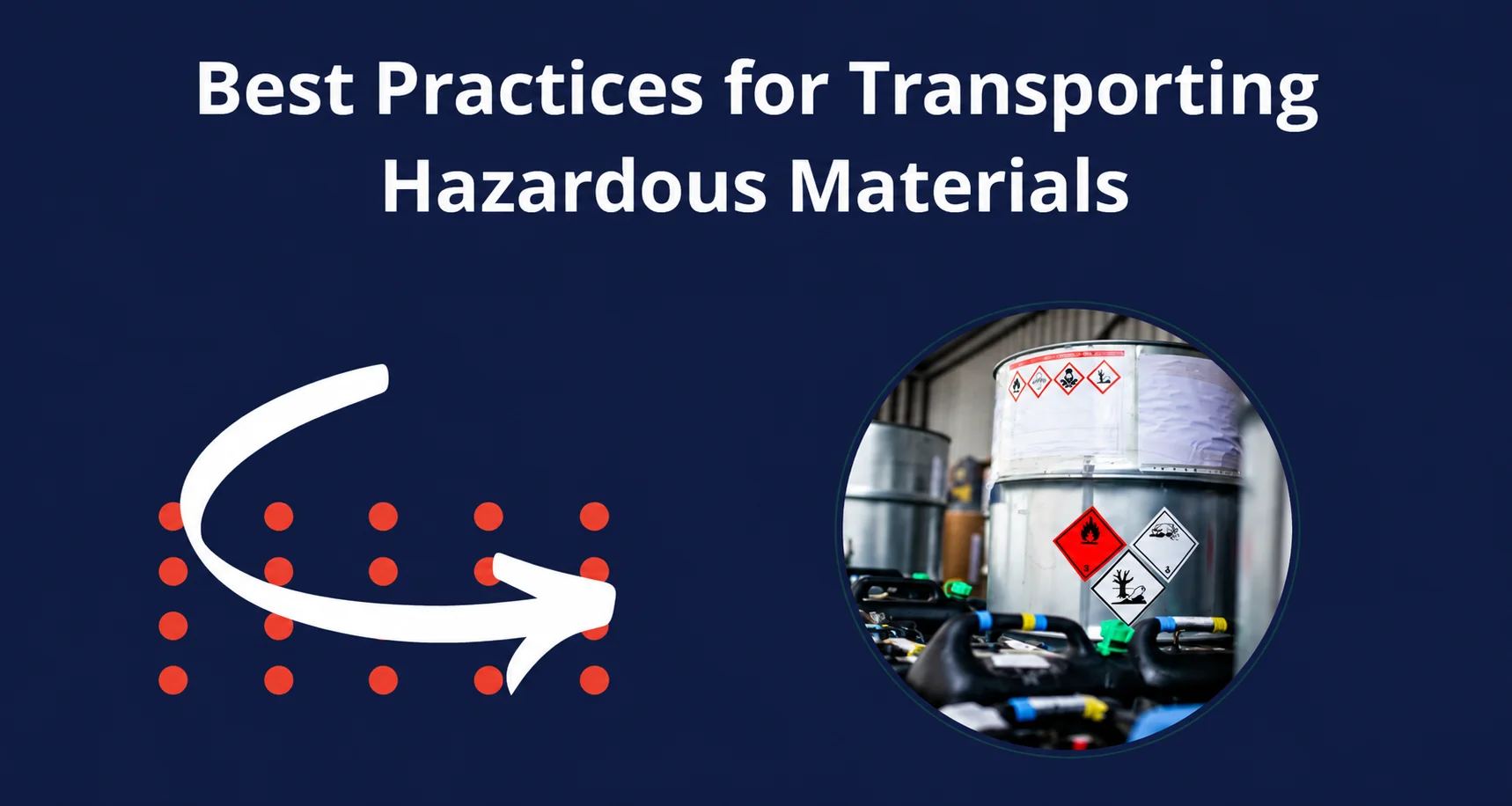
Incorporating best practices for dangerous goods transportation can help reduce the risk of chemical incidents causing damage.
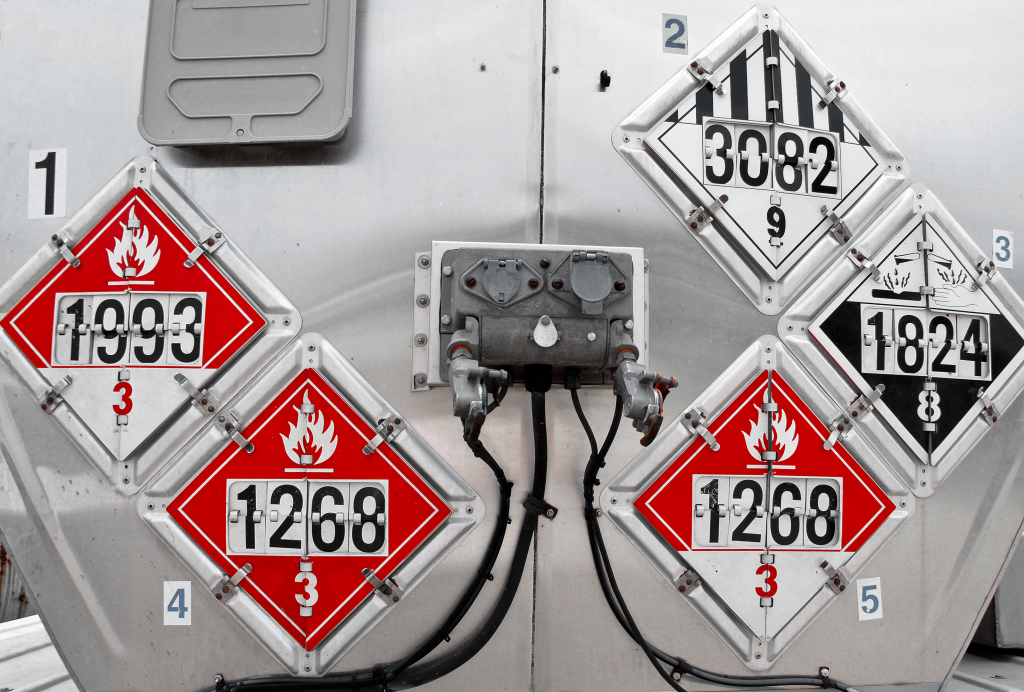
Hazardous materials (HAZMAT) or dangerous goods are any substances or materials that could pose risks to the health and safety of people and the environment in general.
However, hazardous materials are needed for essential purposes such as medical treatments and industrial processes. Therefore, it is important to understand the rules and regulations of HAZMAT shipping.
We’ll cover how to transport hazardous materials, the process of HAZMAT registration, and more.
What is HAZMAT shipping?
HAZMAT shipping is the process of transporting hazardous materials from point A to point B. This includes the preparation of documents, taking necessary precautions for safe transit, and labeling containers properly.
In the United States, federal law requires handlers and shippers to be trained and certified to safely handle and transport hazardous materials by air, ground, or water.
What is considered a hazardous material in shipping?
The US Department of Transportation (USDOT) – Pipeline and Hazardous Materials Safety Administration (PHMSA) has an extensive and comprehensive list of what they consider hazardous materials, each with its corresponding codes and classifications.
In general, this includes substances, materials, and hazardous wastes that are flammable, poisonous, corrosive, explosive, gases, oxidizing substances, or radioactive.
There are 9 classes of hazardous materials.
-
- Class 1: Explosives
-
- Class 2: Gases
-
- Class 3: Flammable and Combustible Liquids
-
- Class 4: Flammable Solid, spontaneously combustible, & dangerous when wet
-
- Class 5: Oxidizer & Organic Peroxide
-
- Class 6: Poison (Toxic) substances & poison inhalation hazard
-
- Class 7: Radioactive
-
- Class 8: Corrosive
-
- Class 9: Miscellaneous, dangerous & limited marking quantity
In addition to the 9 classes, each entry in the Hazardous Materials Table specifies the requirements for the labeling, packaging, quantity, and documentation of each type of hazardous material.
For more information, refer to the USDOT Hazardous Materials online portal or the Hazardous Materials Information Center, which is available from Mondays to Fridays, 9 AM to 5 PM.
What is HAZMAT Registration?
Transporters and suppliers handling certain quantities and types of hazardous wastes and materials are required to file an annual registration statement to the USDOT – Pipeline and Hazardous Materials Safety Administration (PHMSA).
Who needs to file for hazardous materials registration?
Transporters who handle the following categories of HAZMATS are required to register:
-
- Highway route-controlled quantity of Class 7 (radioactive) materials
-
- Division 1.1, 1.2, or 1.3 (explosive) material that is more than 55 pounds
-
- Material extremely toxic by inhalation that is more than 1 liter per package that meets the criteria for “hazard zone A”
-
- HAZMAT in bulk packaging greater than 3,500 gallons for liquids or gases or greater than 468 cubic feet for solids
-
- A shipment in other than bulk packaging of 5,000 pounds or more of one class of hazardous materials that requires placarding
-
- HAZMAT that requires placarding
Certain professional organizations, however, are exempted from the HAZMAT registration requirements, such as federal government agencies, state agencies, tribes, and tribal governments, etc.
There are also special registration requirements for farmers, water transportation providers, and hazardous waste generators.
When and where is the registration for hazardous materials?
The period for HAZMAT registration is usually between May and June every year. It is also the same period for HAZMAT registration renewal.
You can register by mail or online. HAZMAT registration by mail takes around 2 weeks to complete, whereas registering online, you can get your registration number within 1-2 days.
How much are the HAZMAT registration fees?
The HAZMAT registration fees vary depending on your business type and registration period (1, 2, or 3 years).
For small and non-profit businesses, the registration fee for 2023 to 2024 is $275, not including processing fees. For medium- to large-sized businesses, the fee is $2,600.
For HAZMAT registration assistance, you can contact DOT Compliance Group.
Who regulates HAZMAT shipping?
The USDOT PHMSA regulates hazardous materials transportation in the US. They make sure that all stakeholders in the supply chain (from manufacturers to shippers, carriers, and receivers) are in compliance with the Hazardous Materials Regulations (HMR).
US-DOT Title 49
The Electronic Code of Federal Regulations (e-CFR: Title 49 CFR Parts 100-185) provides full and complete requirements for the shipment of hazardous materials.
International Maritime Dangerous Goods Code (IMDG) Code
The IMDG code provides instructions for the safe transport of hazardous materials by water.
International Air Transport Association (IATA) Dangerous Goods Regulations
The IATA manual outlines instructions and regulations for the safe transport of hazardous materials by air.
International Civil Aviation Organization (ICAO) Technical Instructions
The ICAO technical instructions provide guidance on the air transport of dangerous goods.
What are the best practices for transporting hazardous materials?
To ensure the safe transport of hazardous materials, the following best practices should be observed:
1. Understand your responsibilities
Familiarize yourself with the applicable regulations and get training from a qualified person. At DOT Compliance Group, we can help you understand the regulations for HAZMAT transport and provide safety training.
2. Develop a hazardous materials shipping system
Develop or adjust your internal system for shipping hazardous materials. This includes procedures on how to properly package, label and document hazardous material shipments.
3. Ensure proper documentation
Make sure that you always have the necessary documents on hand during transit, like a Shipper’s Declaration of Dangerous Goods, a Certificate of Origin, and/or a Dangerous Goods Transport Document.
4. Use appropriate packaging and labels
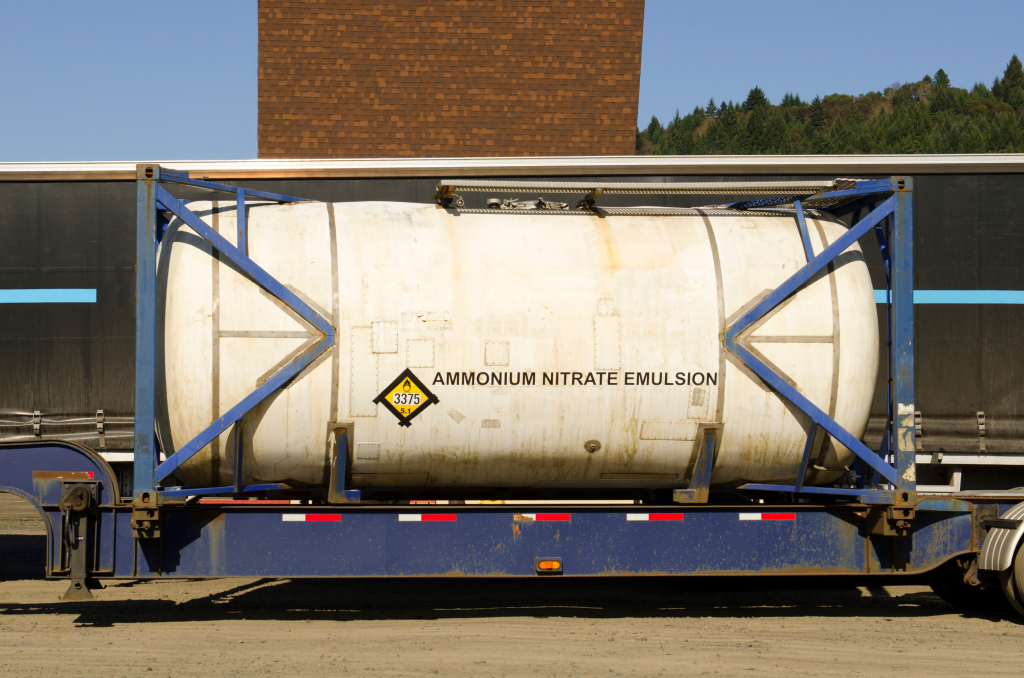
Make sure that the packaging is appropriate for the hazardous material and correctly labeled with hazard symbols, UN numbers, etc.
HAZMAT Shipping Guide
1. Assess the classification
The first step in shipping hazardous materials is to assess the classification of your HAZMAT. To do this, you can check the Occupational Safety and Health Administration (OSHA) Hazard Communication Standard: Safety Data Sheets to identify the hazardous material’s hazard class, UN number, etc.
You can also refer to USDOT PHMSA’s Hazardous Material Table.
2. Choose the right packaging
The type of appropriate packaging depends on the hazardous material’s hazard class. To check, refer to 49 CFR, Part 173, which details the general packaging requirements for HAZMATs. The PHMSA categorizes the packaging into 3 groups:
-
- Packing Group I: Great Danger
-
- Packing Group II: Medium Danger
-
- Packing Group III: Minor Danger
3. Label appropriately
The labeling, markings, and placards used for hazardous materials must comply with 49 CFR, Part 172. For more guidance, refer to the Hazardous Materials Markings, Labeling and Placarding Guide.
4. Prepare the necessary documentation
Depending on the category of the HAZMAT and the transportation method, you may need the following documentation:
-
- Shipper’s Declaration of Dangerous Goods: This is obtained from the shipper or supplier to certify that the hazardous material is properly packaged and labeled.
-
- Certificate of Origin: This document states where the HAZMAT originated.
-
- Dangerous Goods Transport Document: This document explains the type and quantity of hazardous materials contained in a shipment.
How safe are your HAZMAT shipping processes?
When shipping hazardous materials, compliance with the applicable regulations is paramount.
At DOT Compliance Group, we provide the necessary resources and guidance to help you understand how to comply with hazardous materials transportation regulations. We also offer specialized training and certification services to ensure the safe transportation of hazardous materials.
Contact DOT Compliance Group today to learn more about our HAZMAT registration services and how we can help you ensure the safe transport of hazardous materials.